
Two Ways to Make a Rack
Roll-formed racking is thin coil sheet steel bent into column and beam shapes at room temperature, punched and painted. Most hang beams on pins or hooks with no bolts; T-bolt uses one bolt per beam end. Almost every teardrop, keystone, Ridg-U-Rak and T-bolt system is roll-formed.
Structural racking uses thicker hot-rolled steel channels, shaped like a C, for columns and beams, bolted together. Frazier, Steel King SK3000 and Unarco structural are the common names.
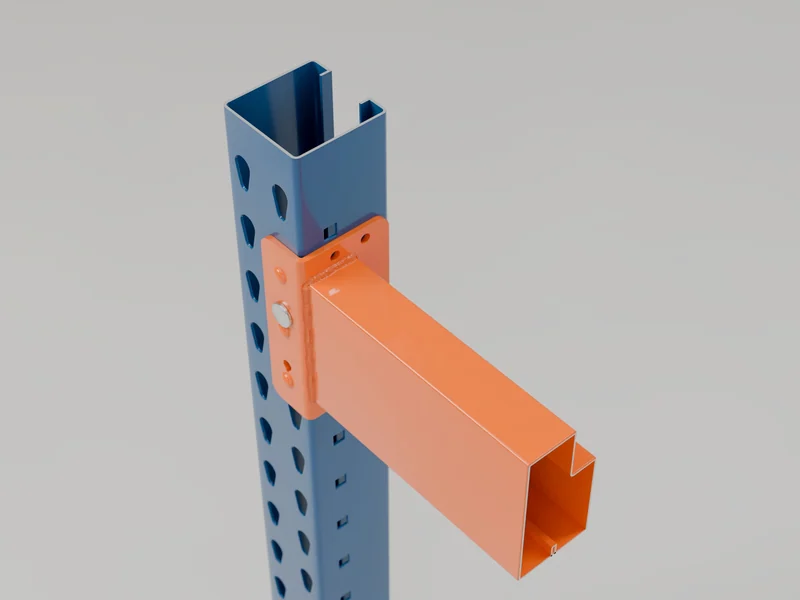
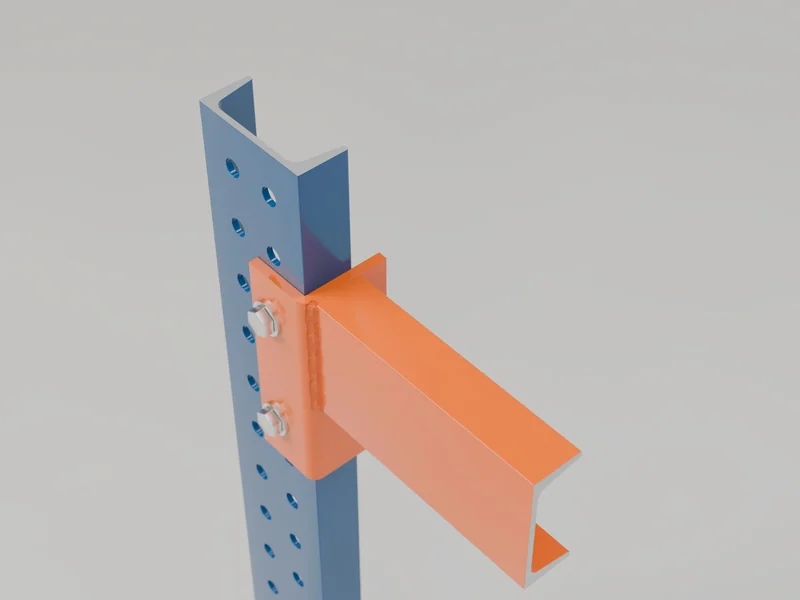
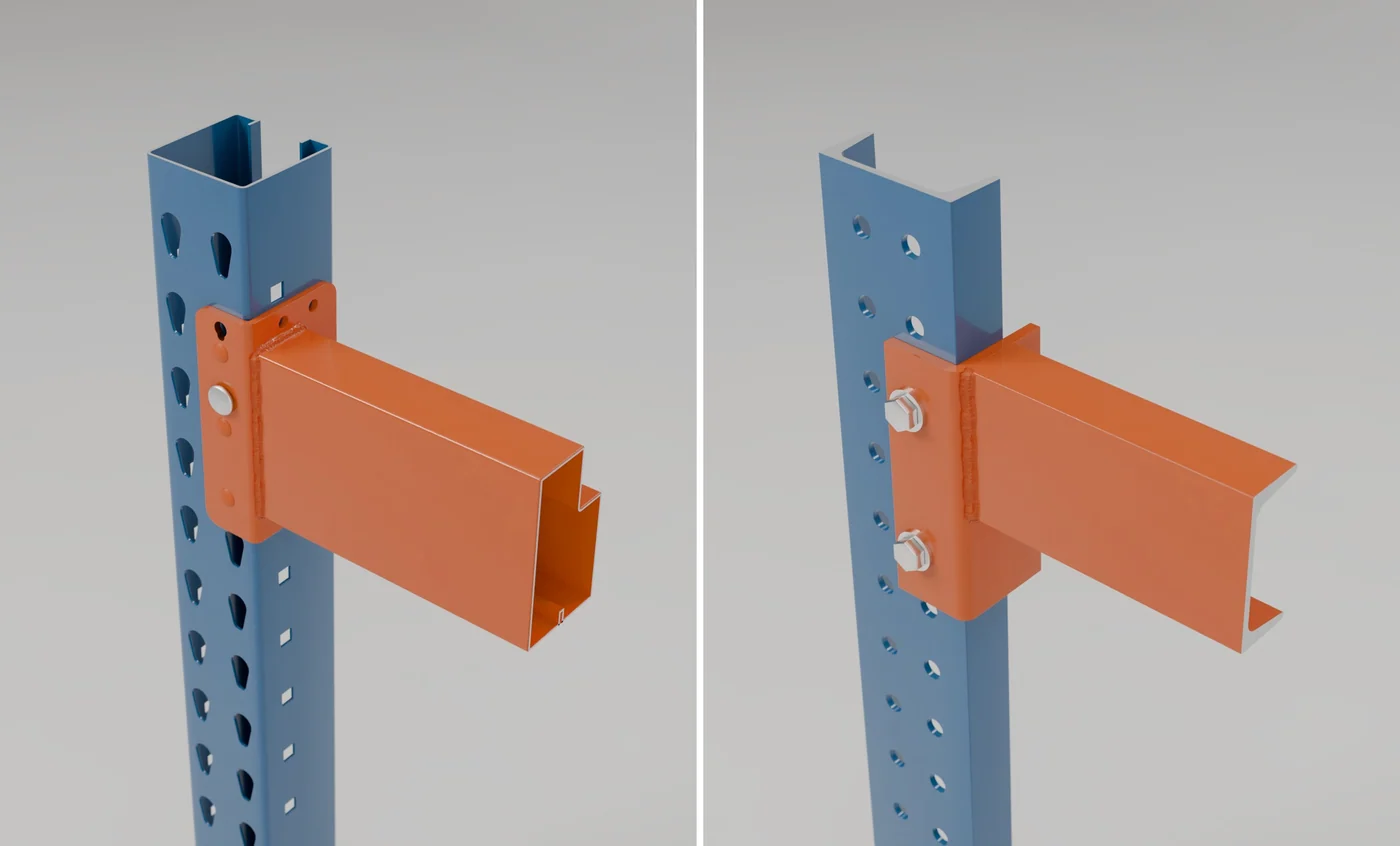
Side by Side
| Roll-formed | Structural | |
|---|---|---|
| Steel | Thin sheet, bent cold | Thicker hot-rolled C-channel |
| Connection | Usually pins or hooks; T-bolt is bolted | Bolted, two bolts per beam end |
| Capacity | From the maker's chart for the section | Often higher at the same size; compare the charts |
| Forklift impact | Dents and tears; a hit column is usually replaced | Takes most hits; columns bend before they fail |
| Weight | Light: two people set a frame | Heavy: frames are set with a lift |
| Cost (material) | Lowest | Higher |
| Install time | Fastest; beams drop in | Slower; every beam is bolted and tightened |
| Adjusting a level | Minutes | Unbolt, move, re-bolt |
| Lead time, new | Shorter | Longer |
| Used availability | Everywhere; most of our yard | Less common; we buy it when we can |
| Where it belongs | Most warehouses, distribution, retail backrooms | Cold storage, food and beverage with heavy traffic, lumber, steel, buildings where the rack holds up the roof, earthquake zones |
When Roll-Formed Is the Right Answer
- Ordinary pallet loads moved by standard forklifts or reach trucks.
- Beam levels that move as products change.
- Budget and lead time come first.
- Buying used: deep supply, low prices.
When Structural Pays
- Heavy, fast forklift traffic that hits the rack.
- Heavy loads: coils, paper rolls, lumber, drums, dense food product.
- Freezers and coolers, where repairs and downtime are expensive.
- Rack-supported mezzanines and structures, where the rack carries a floor or roof.
- Drive-in and drive-through racks, where trucks drive into the rack and hit rails and columns daily.
- Earthquake zones: bolted connections and heavier columns help.
The Middle Ground
We quote both hybrids:
- Structural uprights with roll-formed beams (where the maker offers a teardrop-punched structural column): the column takes the hits, the beams stay cheap and adjustable.
- Roll-formed rack with column protection: guards, bollards (steel posts) and end-of-aisle guards cost a fraction of structural and solve most impact problems. See rack protection.
Identifying Yours
Round holes and two bolts per beam end through an angle bracket: structural. Teardrops, keyholes or slots on thin formed steel: roll-formed. The style guide pictures every connection.
Common questions
Is structural racking stronger than roll-formed?
Often, but compare the rated charts: section, gauge, steel, connector and span decide capacity. Structural usually survives hits that dent or tear roll-formed. For ordinary pallets and careful drivers, roll-formed is plenty and costs far less.
How much more does structural racking cost?
Material costs noticeably more at the same bay size, and installation takes longer because every beam is bolted. Used structural, when we have it, closes most of that gap.
Can I mix structural uprights with roll-formed beams?
Yes, where the maker punches structural columns with teardrop slots so roll-formed beams drop in. Popular for cold storage and busy aisles.
Which is better for a freezer?
Structural, or structural uprights with roll-formed beams. Freezer racks get hit more (gloves, fog, speed) and repairs there are expensive.


