
Three Shapes, One Job
The cross-section decides what decks fit, how the beam is made and what it carries.
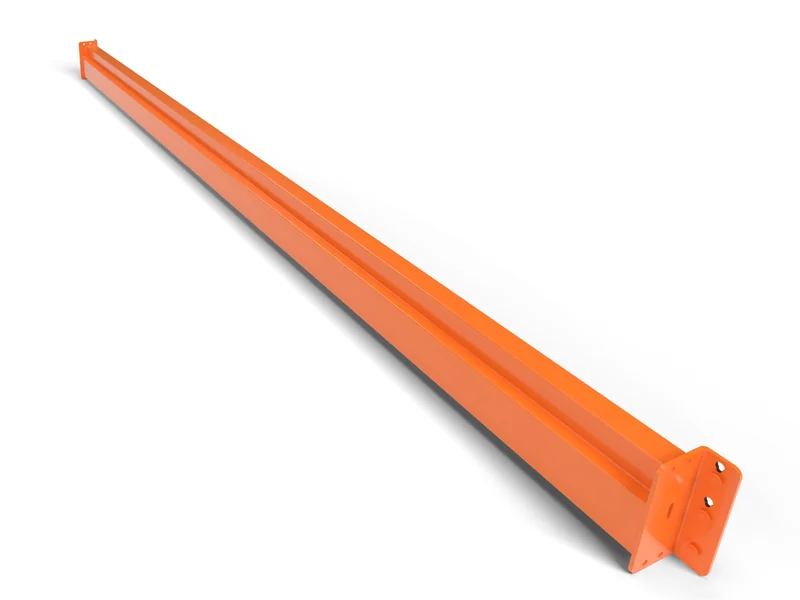
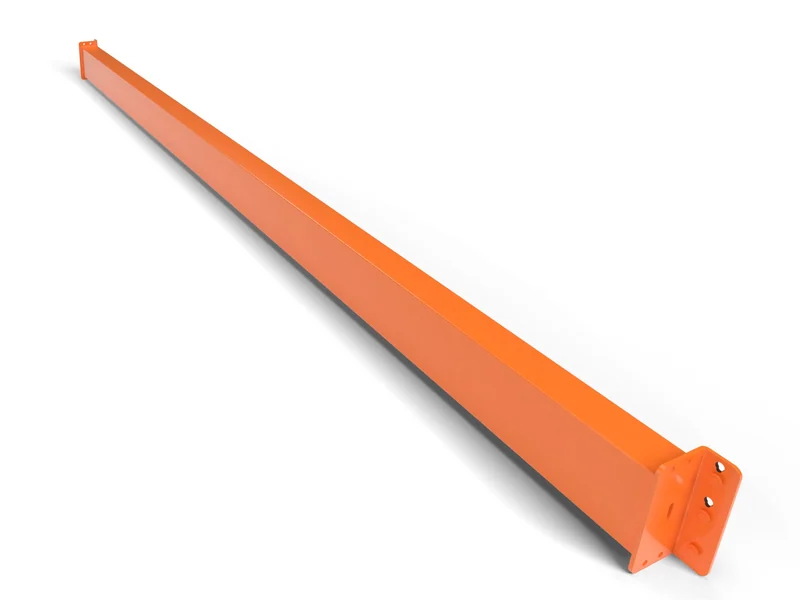
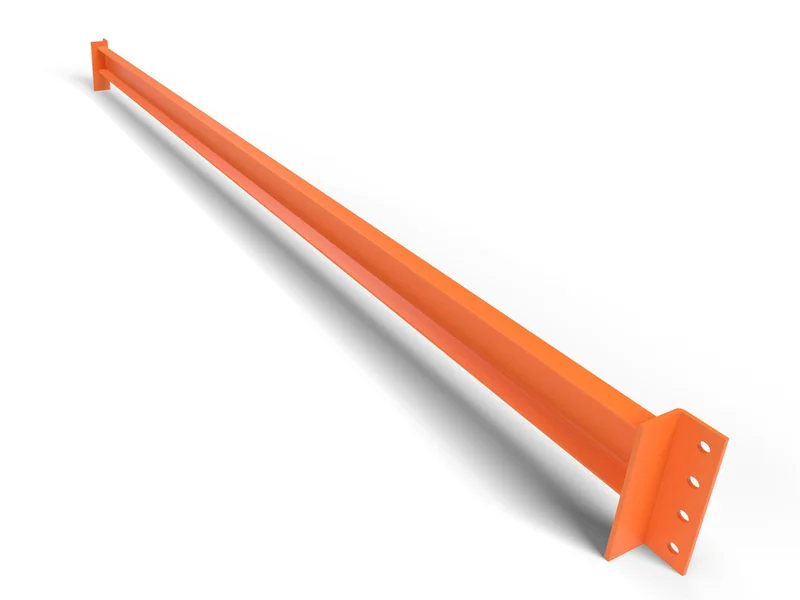
Step Beam
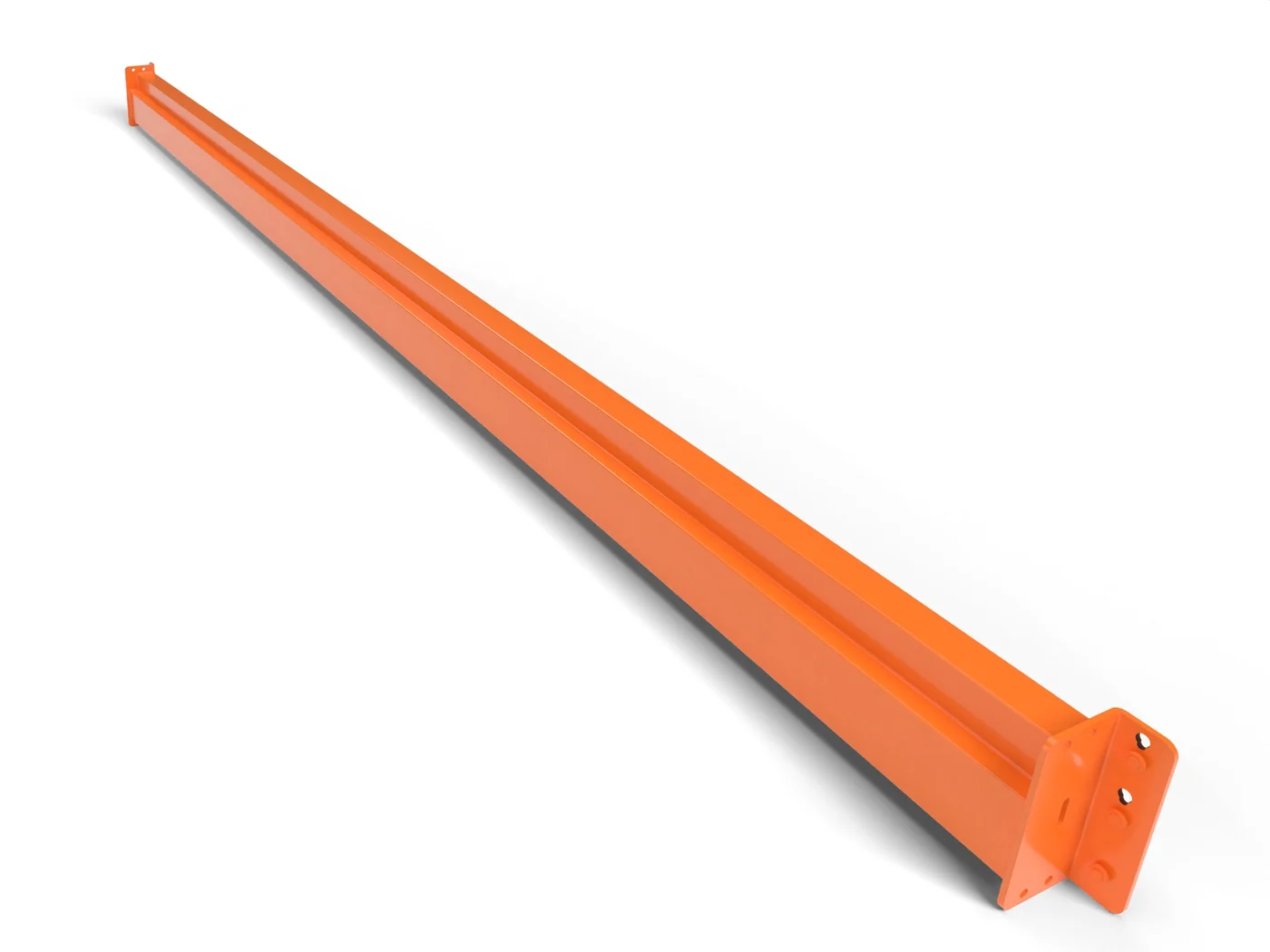
- Rolled from sheet steel with the step formed in; welded seam.
- Made in several face heights (the height of the front of the beam). The maker's chart gives the rating; face height alone does not.
- Step-channel wire decks, pallet support bars and flue dividers (bars that keep a gap behind the pallets) hang in the step without clips.
- Nearly every teardrop and new-style beam is a step beam.
Box Beam
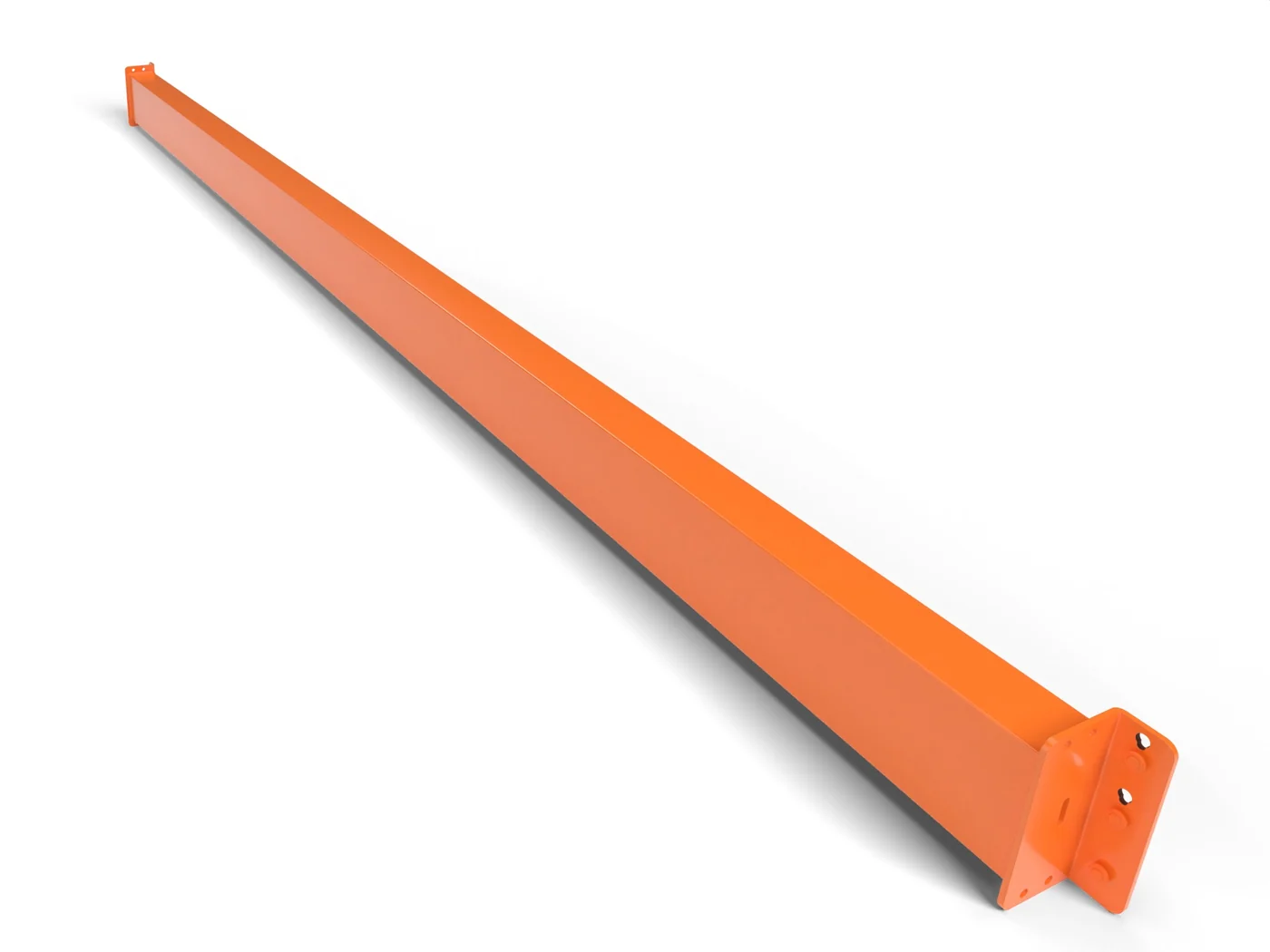
- Rolled from sheet and welded like a step beam, but a plain rectangle.
- Taller box beams carry heavy loads on long bays; some makers use them on all heavier series.
- Decks: U-channel (inverted) or universal on top, or flush decks made to the beam. Step-channel decks won't fit. See wire deck styles.
- Pallet supports clip over the beam instead of dropping in.
C Beam (Structural)
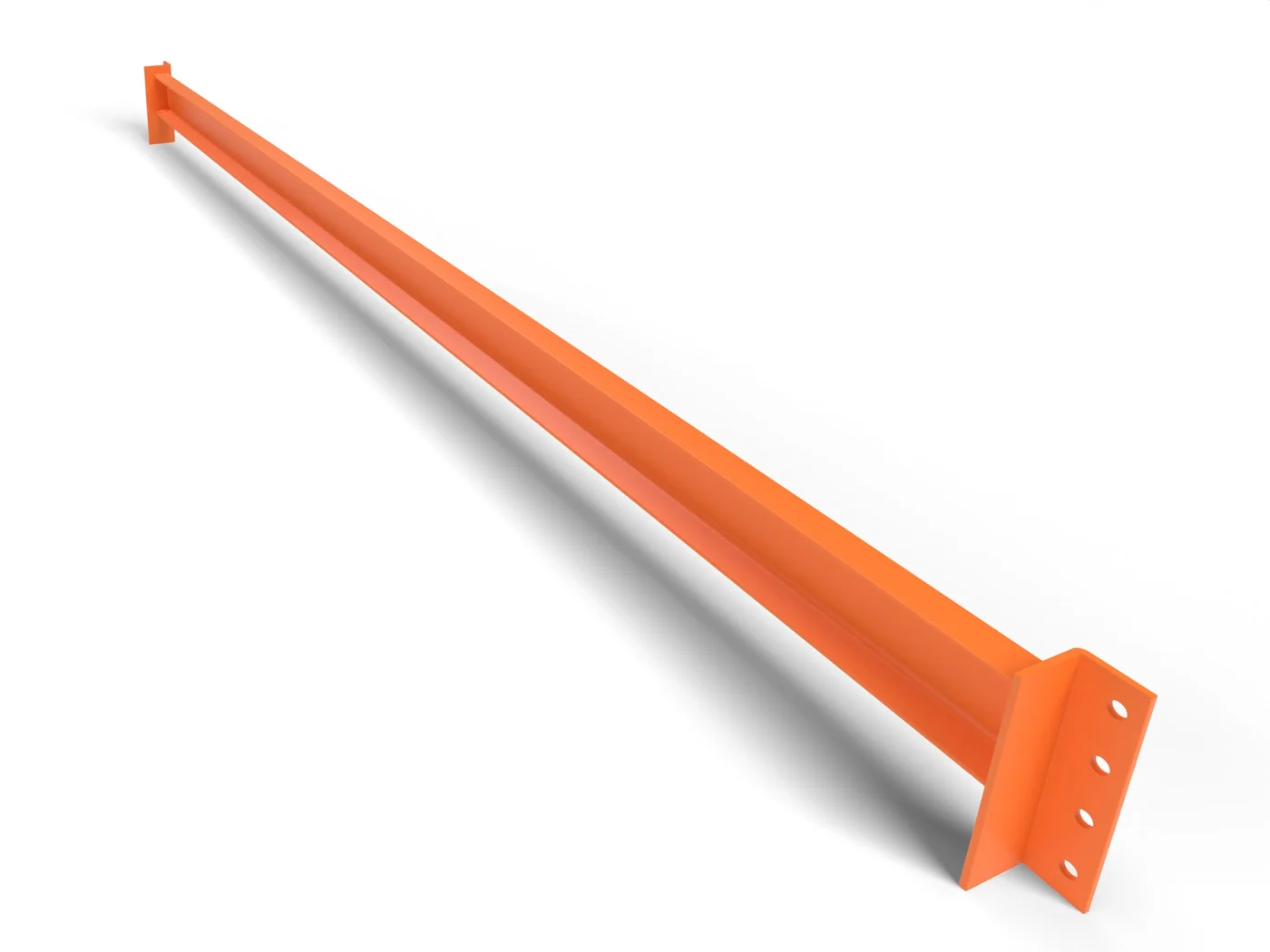
- Hot-rolled channel with a welded angle bracket on each end; two bolts per end through the column.
- Often carries more at the same size, and takes forklift hits better than a rolled beam. Check the chart.
- Decks and supports must be made for the beam. Use the deck maker's approved fit and rating for that channel.
Picking the Beam
| Step | Box | C (structural) | |
|---|---|---|---|
| Rack type | Roll-formed, teardrop | Roll-formed, heavy series | Structural |
| Decking | Step-channel decks drop in | U-channel or universal decks on top | Decks made for the channel |
| Adjust a level | Pull the pins, move, re-pin | Same | Unbolt and re-bolt |
| Where | Most warehouses | Heavy product on long bays | Cold storage, heavy traffic, lumber, steel |
Capacity is per pair, load spread evenly, from the maker's chart for that exact section, steel and connector, not face height alone. Send length, face height and an end photo for the rating.
How to Measure a Beam
- Length inside to inside of the connector plates. The bay is that plus one column width.
- Face height: top to bottom of the front of the beam.
- Step or box: check the inside top edge.
- Connector: count the pins, note the lock, photograph the plate to identify the style (style guide).
- Colour and label help us match used stock.
Full measuring guide; sizes in stock on cross beams.
Common questions
What is the difference between a step beam and a box beam?
A step beam has a step on the inside top edge that wire decks and pallet supports drop into. A box beam is a closed rectangle and needs decks that sit on top.
Can I use step-channel wire decks on a box beam?
No, the channels have nothing to sit in. Box beams take U-channel (inverted) or universal decks that rest on top.
What is a C beam?
The structural rack beam: a hot-rolled channel bolted to the column with two bolts through a welded angle bracket on each end. It often outcarries a rolled beam of the same height and takes forklift hits better. The chart has the rating.
How much does a beam pair hold?
It depends on the length, the section, the steel and the connector. Face height or beam shape alone does not tell you. The exact figure is on the maker's chart, which we supply with every beam.


