

What Is Cantilever Racking?
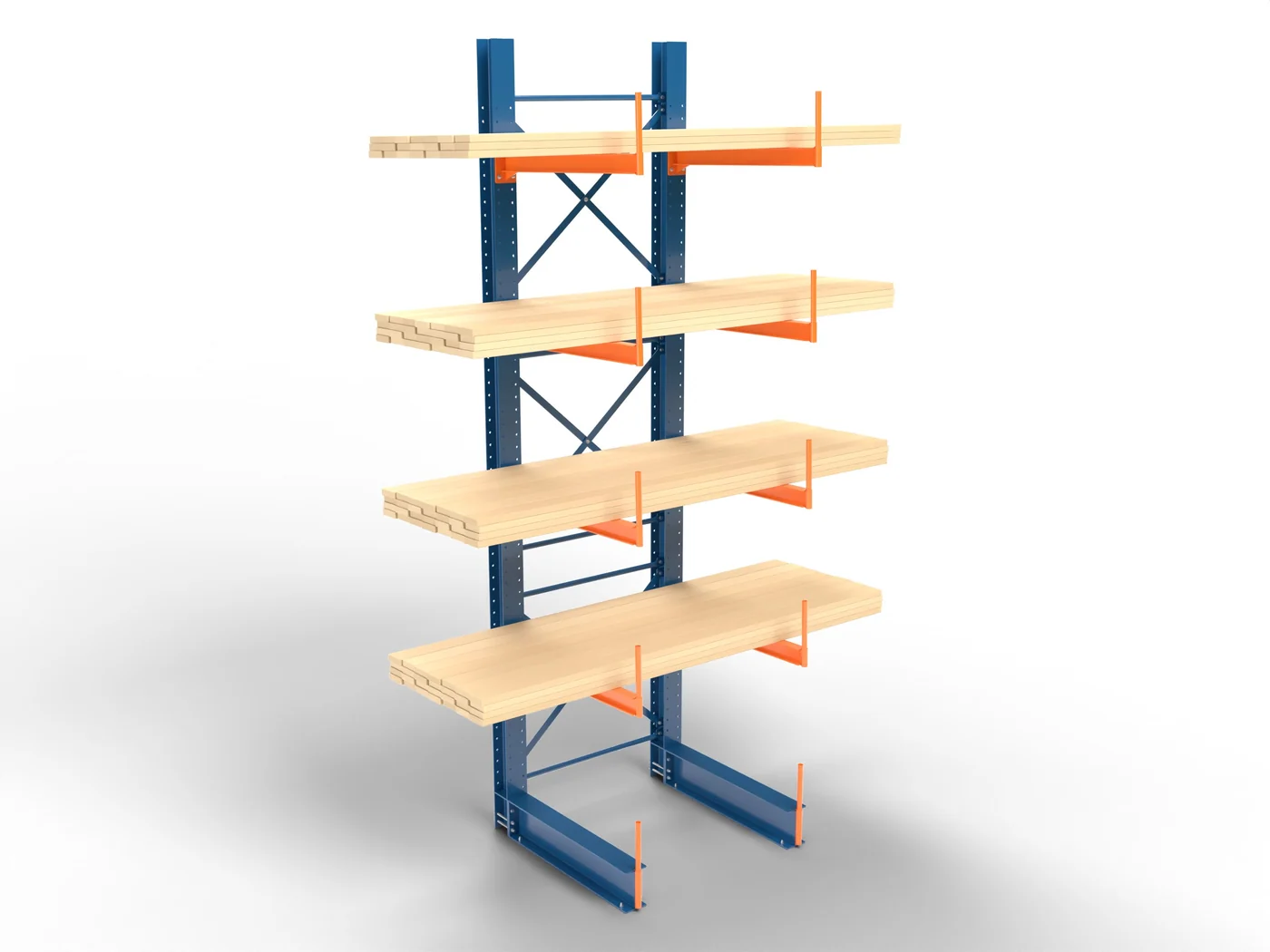
Long loads sit on arms that reach out from steel columns. No front posts, so a 20-foot bundle of pipe goes in from the aisle in one move.
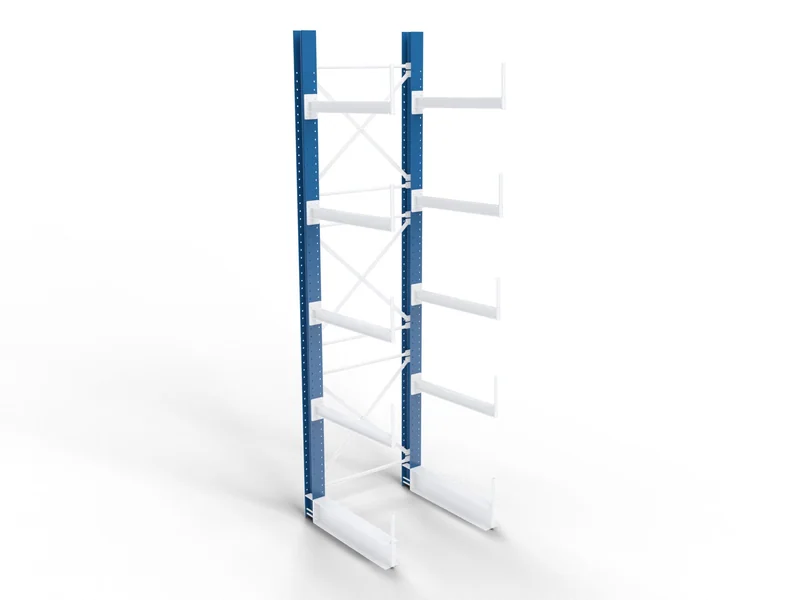
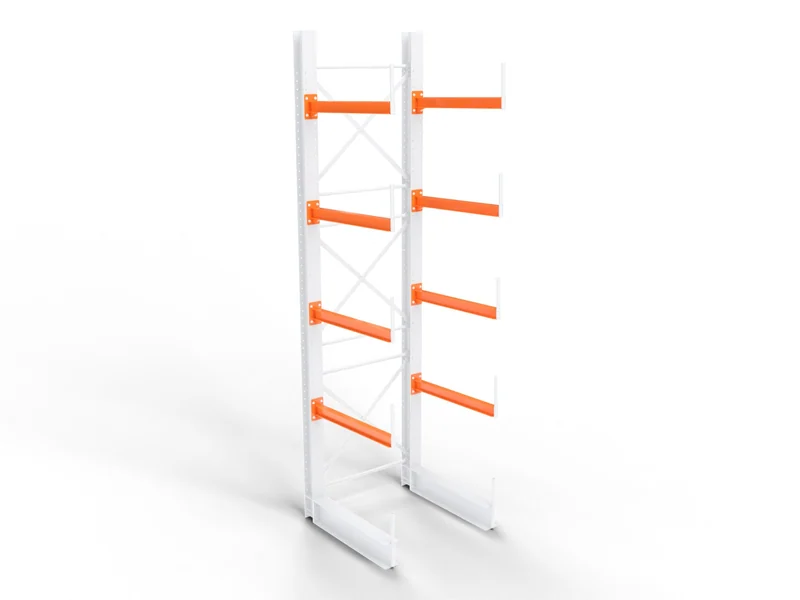
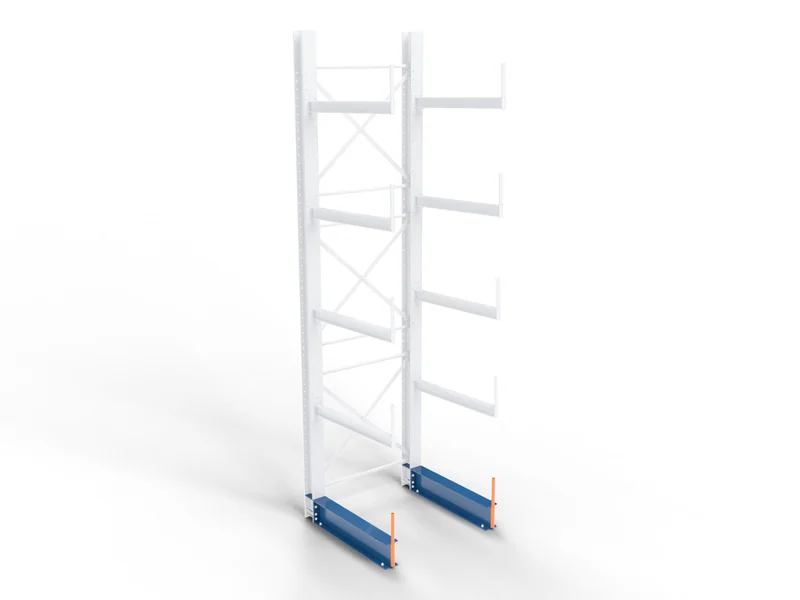
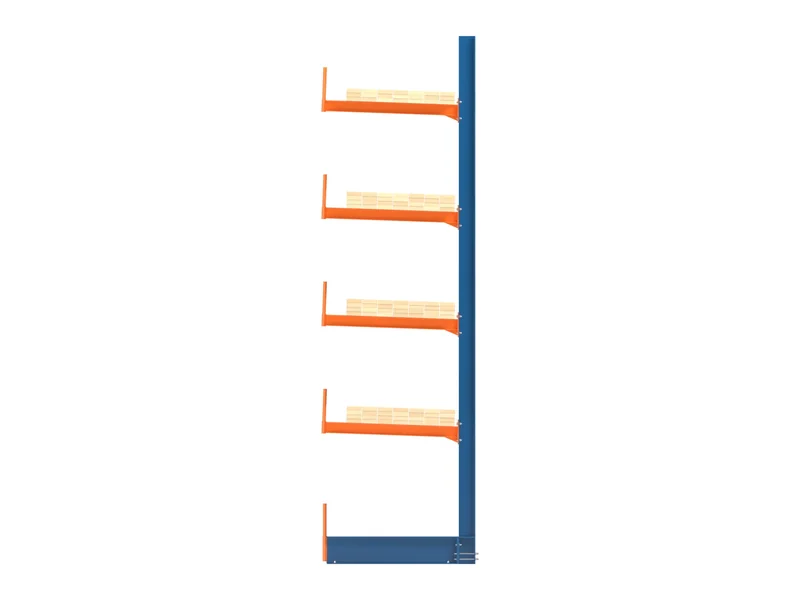
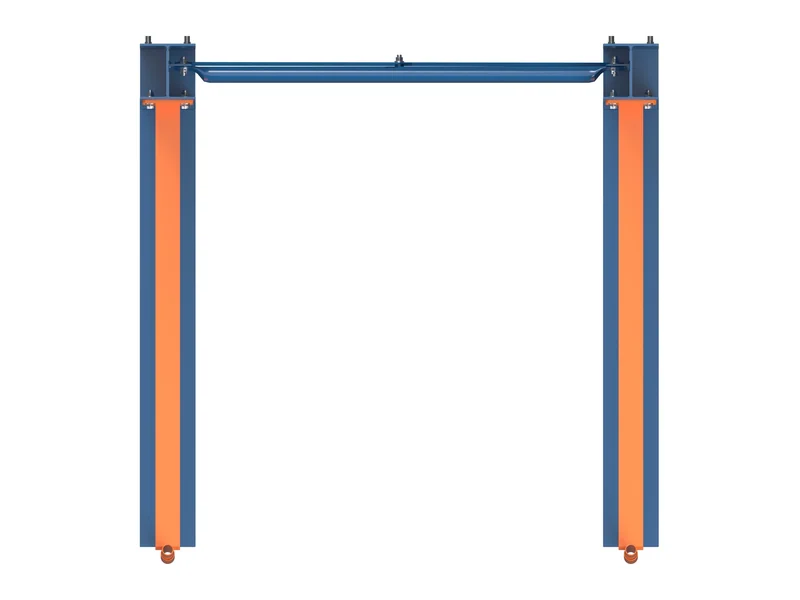
Each column stands on a base that keeps it from tipping. Arms bolt on and move up or down. Columns are braced in pairs. Single-sided against a wall, or double-sided.
How Cantilever Racking Works
- Set the columnsSpaced for your material so loads do not sag, anchored through the base.
- Brace them in pairsKeeps the row square.
- Bolt on the armsAt the levels you need. The base is the bottom level.
- Load from the aisleForklift or side loader, from the open face.
- Stop the rollEnd stops or inclined arms, per the maker, keep pipe and bar on.
Advantages of Cantilever Racking.
- No front posts.
- Any length. Add columns as the material gets longer.
- Adjustable arms.
- Heavy loads. Steel bar, plate and bundled pipe.
- Indoors or out. Painted or galvanized.
- One move per load. No restacking.
Is Cantilever Racking Right for You?
Choose cantilever when:
- Material over about 8 feet: lumber, pipe, tube, bar, conduit, molding or sheet goods.
- Loads that do not sit on a pallet.
- Side loading with a forklift or side loader.
- Outdoor storage, in a yard or lean-to.
Selective racking is better when:
- Goods on standard pallets that fit a 96" or 120" beam opening.
- Many small pick positions.
- Tight floor space. Bases take depth and long loads need wider aisles.
Cantilever Racking Components
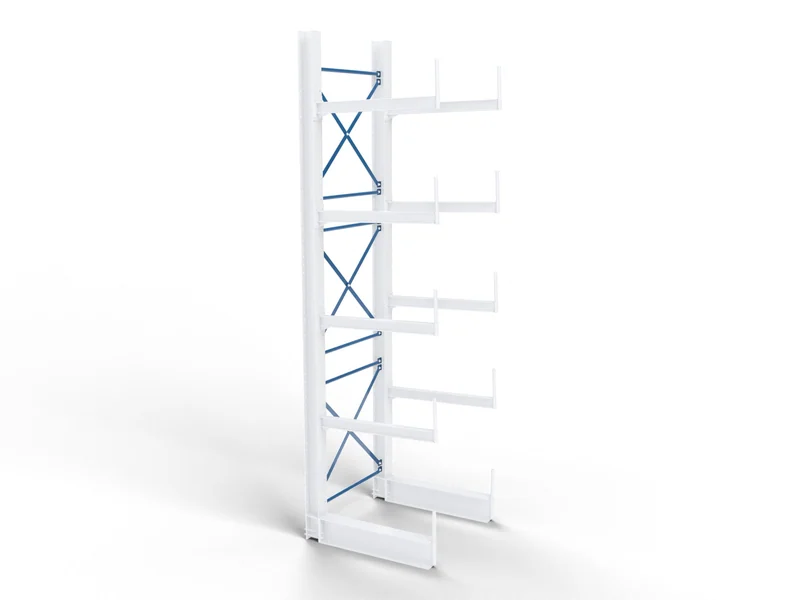

Cantilever Racking From Every Side
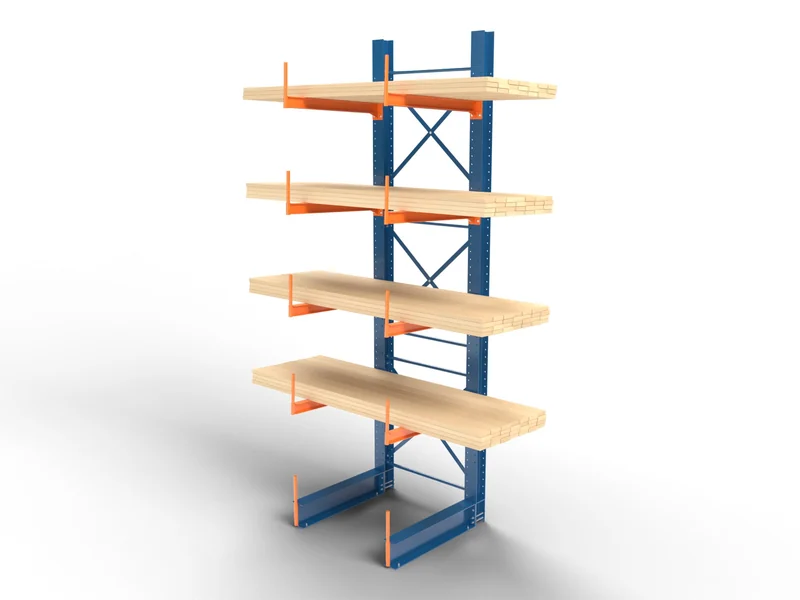
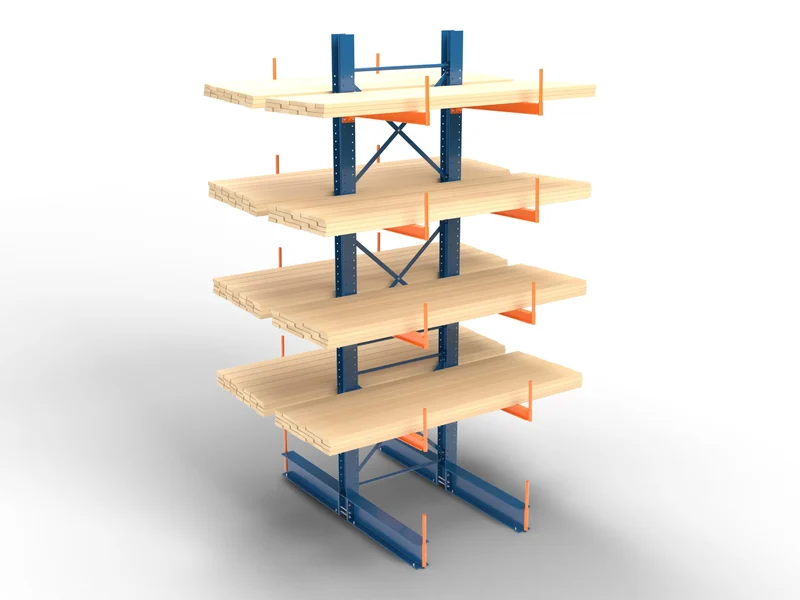
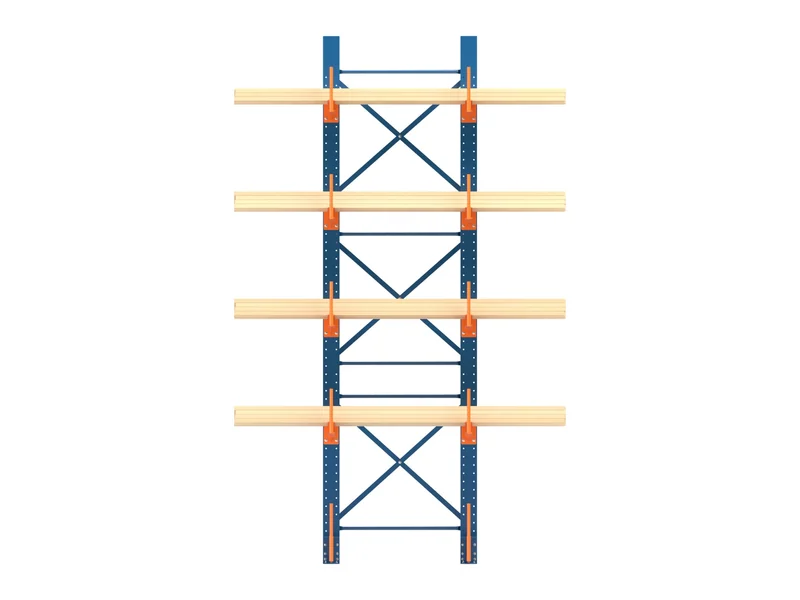

Sizes, Specs and Options
- Arm lengths: from 12" to 72".
- Arm style: straight or inclined; straight arms can have a lip or a removable end-stop pin.
- Arm adjustment: in steps set by the column hole pitch.
- Base length: usually a few inches longer than the arm.
- Column spacing: set by the stiffness of your material, per the maker.
- Single- or double-sided: same column series.
- Duty: roll-formed for trim, PVC and furniture; structural I-beam for lumber, steel and plate.
- Finish: powder-coat indoors, hot-dip galvanized outdoors.
- Capacity: rated per layout.
- New and used: used structural when we can get it.
Where Cantilever Racking Is Used
- Lumber yards and building supply.
- Steel service centers, bar, tube, angle and plate.
- Plumbing and electrical supply, pipe and conduit.
- Furniture and carpet, sofas and rolls.
- Manufacturing, extrusions and long raw stock.
- Outdoor yards, galvanized.
Common questions
How far apart should the columns be?
Close enough that the load does not sag. It depends on how stiff the material is and how it is bundled. The maker sets the spacing for your material.
How is arm capacity rated?
Each arm is rated for an even load along it. The column and base have their own ratings, so adding up the arms does not rate the column. Weight at the tip lowers the arm rating.
Single-sided or double-sided?
Single-sided stands against a wall. Double-sided puts arms on both sides of one column line. It needs more depth and an aisle on each side.
What aisle width do I need?
A counterbalance forklift turning with 16-foot stock usually needs 15 feet or more; a side loader works much narrower.
Do I need a permit, and can I buy used?
Most towns want a permit over eight feet, and outdoor racks may need wind and frost checks. We handle the filing. Used structural cantilever saves money if columns, arms and bracing are one series.


