

What Is Push-Back Racking?
Pallets two to six deep, worked from one aisle, on nested carts on sloped rails. Each new pallet pushes the last one back; take one out and the rest roll forward. Last-In, First-Out (LIFO).
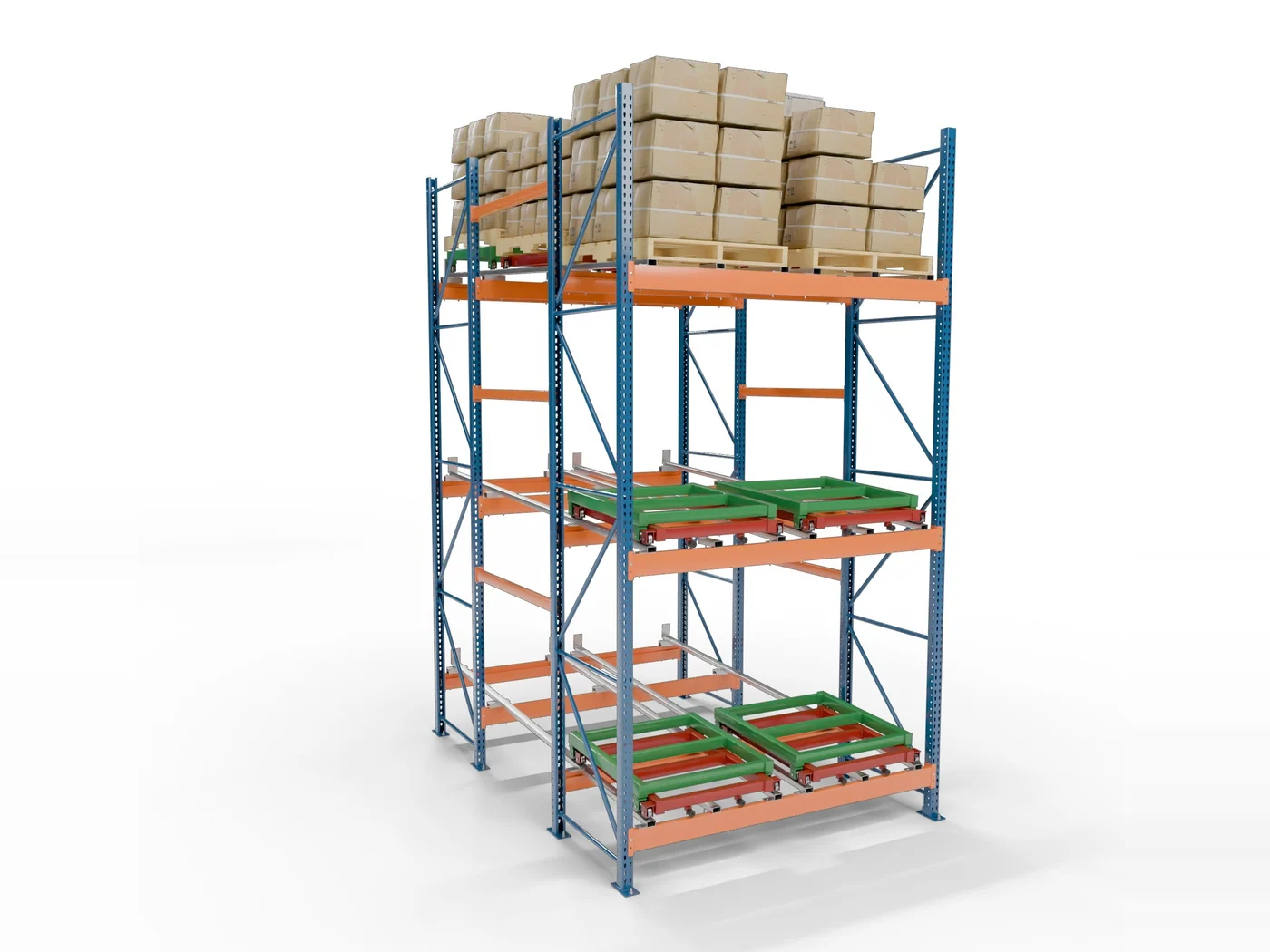
Advantages of Push-Back Racking.
- Fewer aisles. Lanes two to six deep.
- Driver stays in the aisle. Less rack damage.
- A different product on every level of every lane.
- Next pallet rolls to the front.
- Standard forklifts.
- Less to cool in coolers and freezers.
- Used carts and rails come up often.
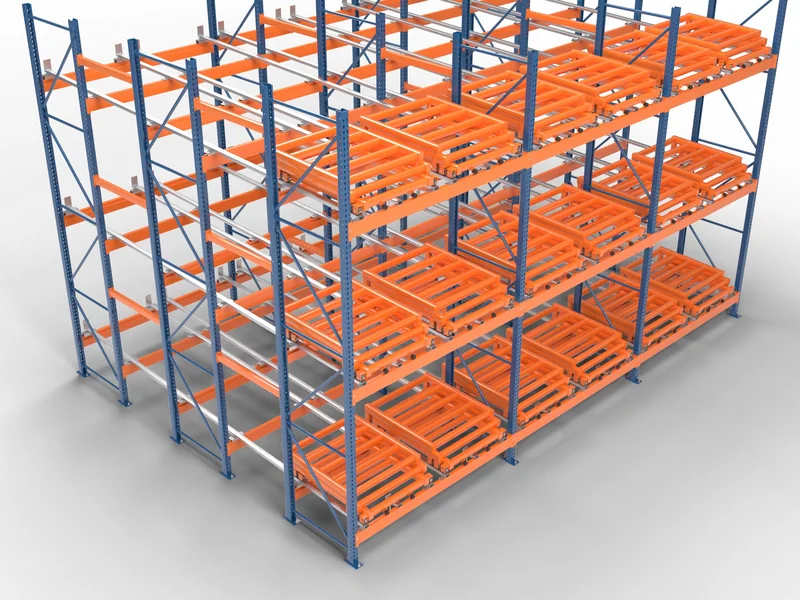
2 to 6 Deep Push-Back
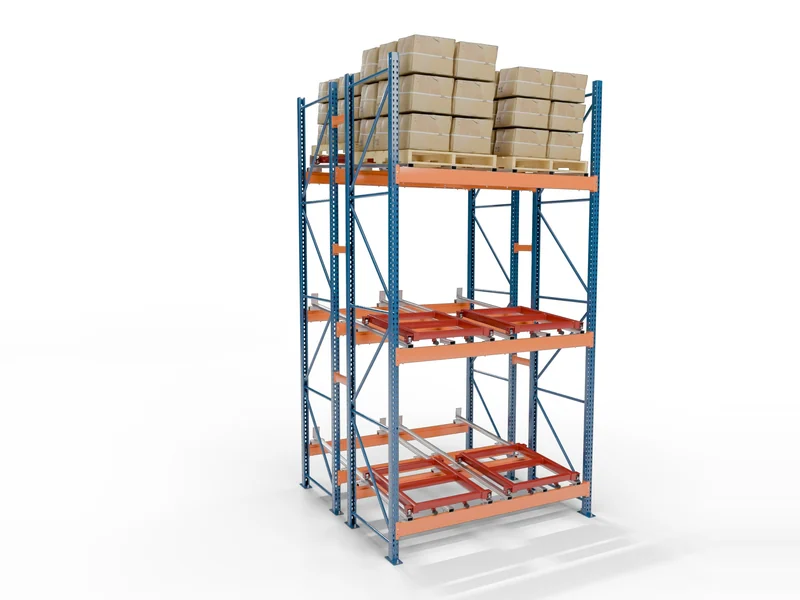
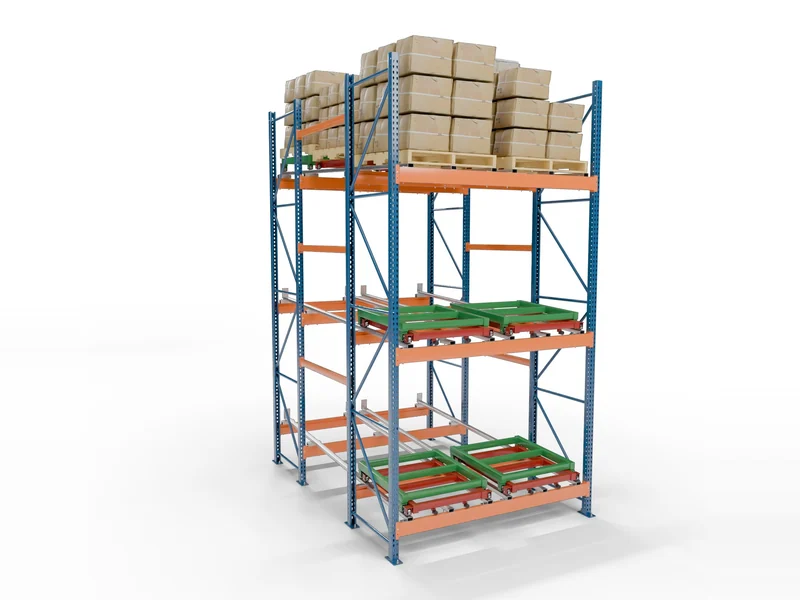
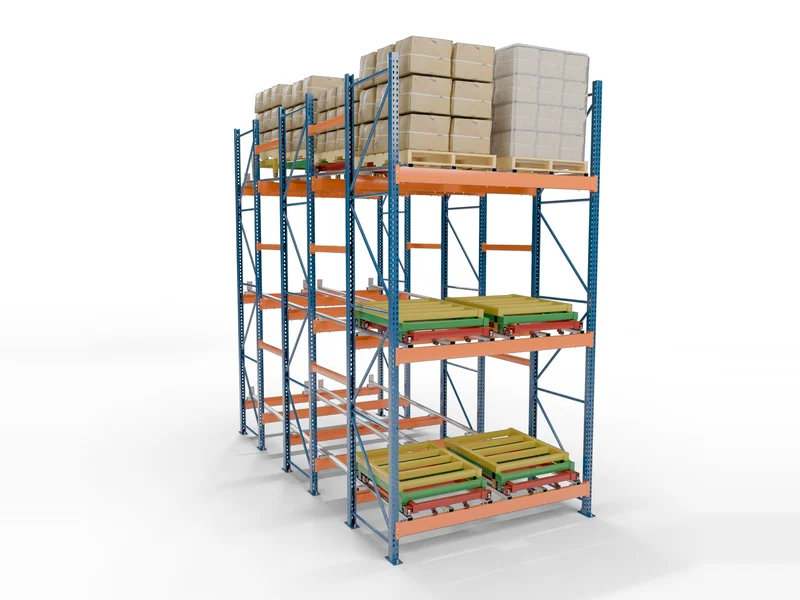
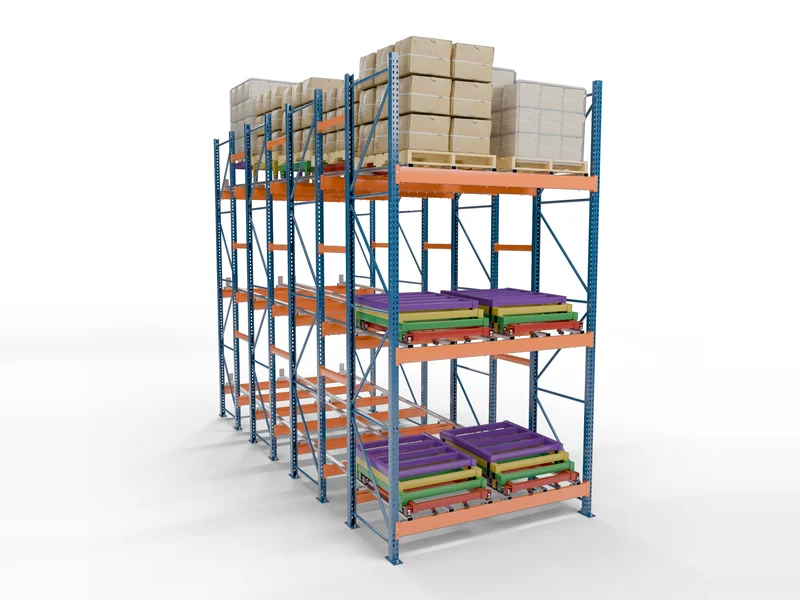
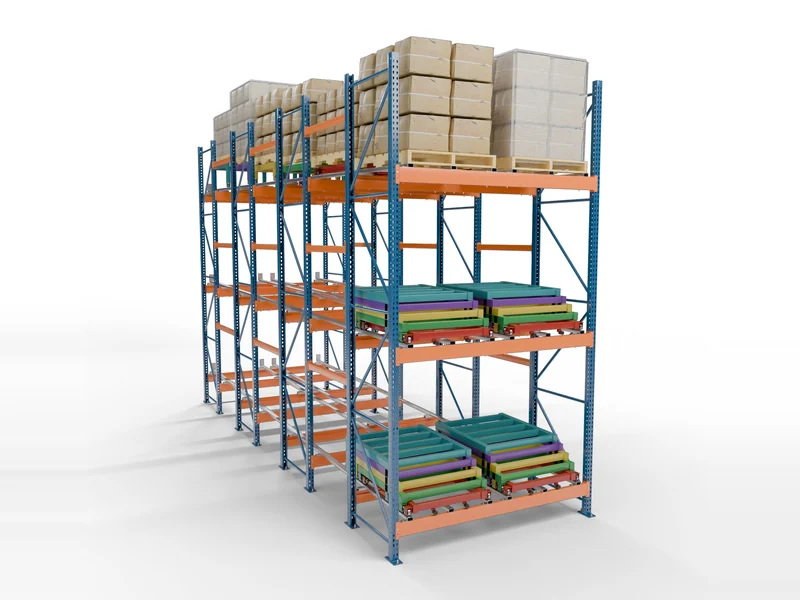
Push-Back Racking Components
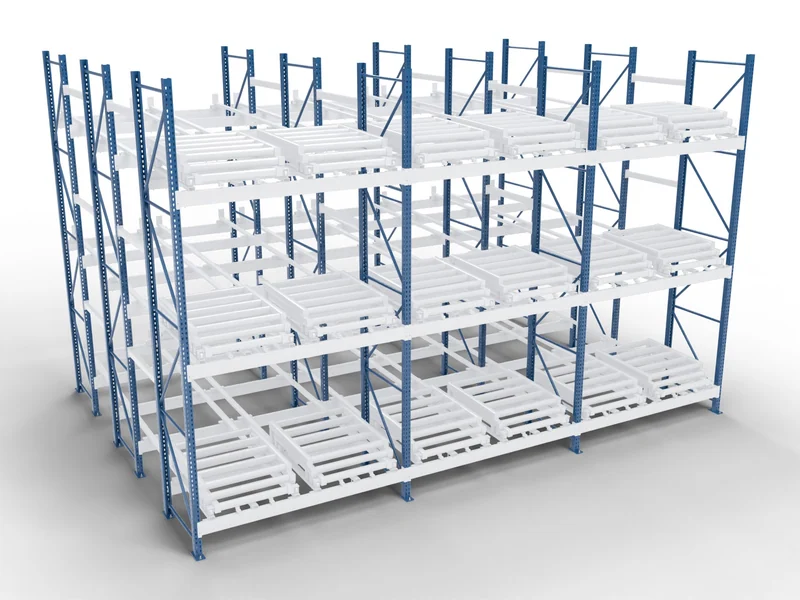
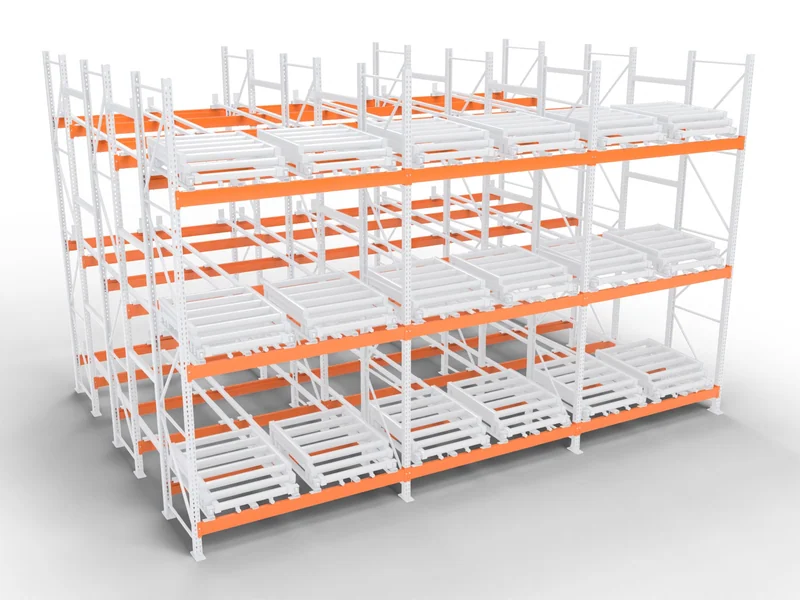
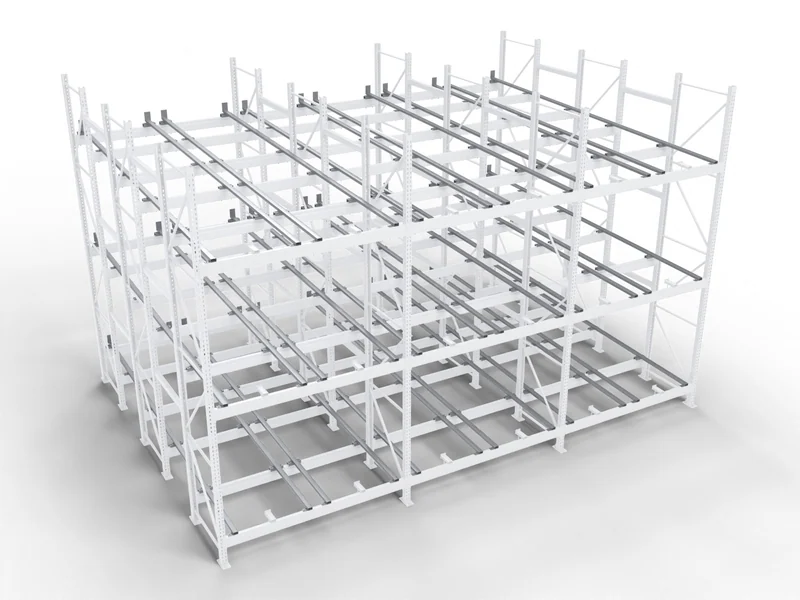
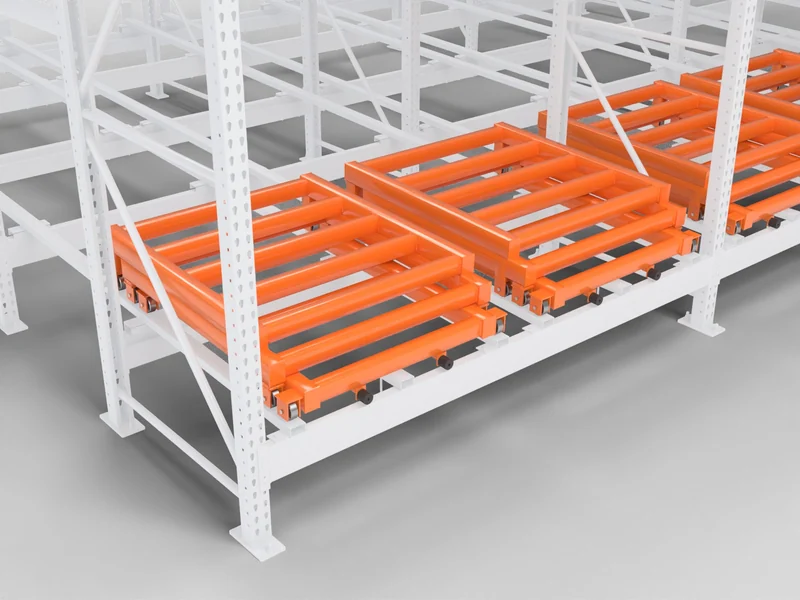
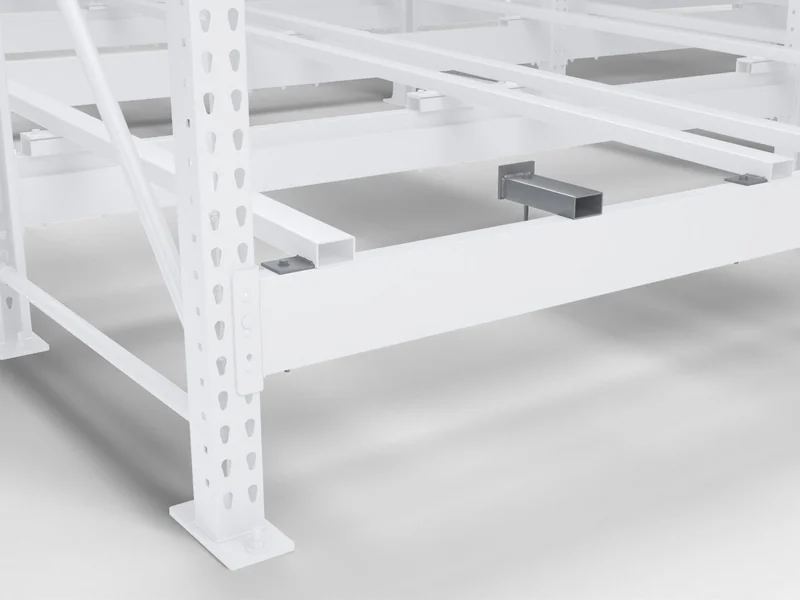
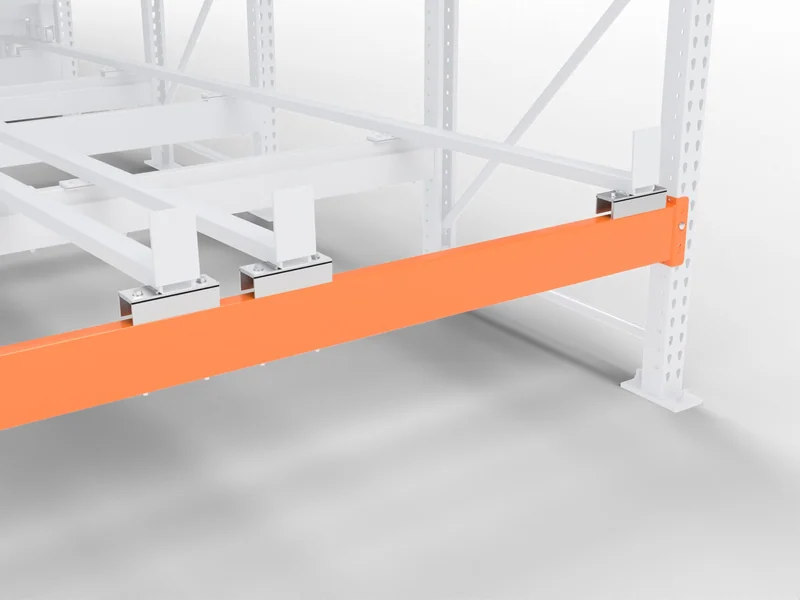
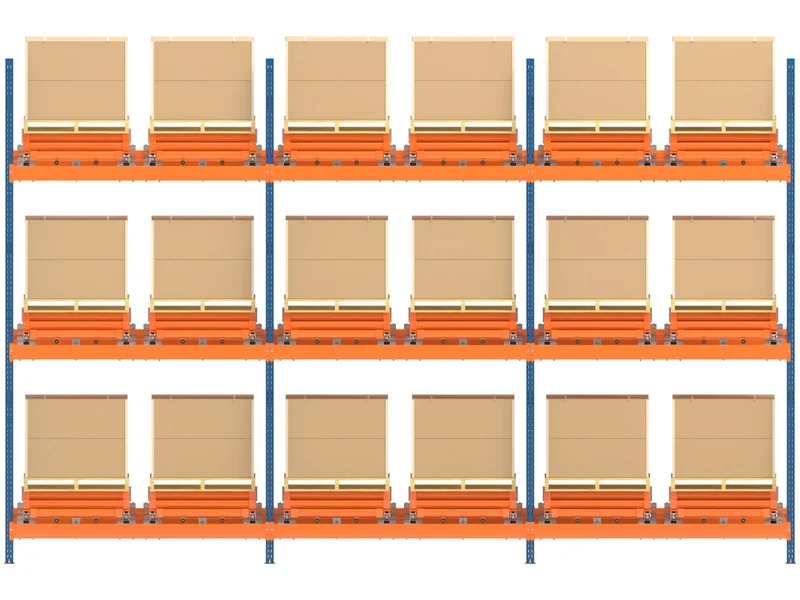
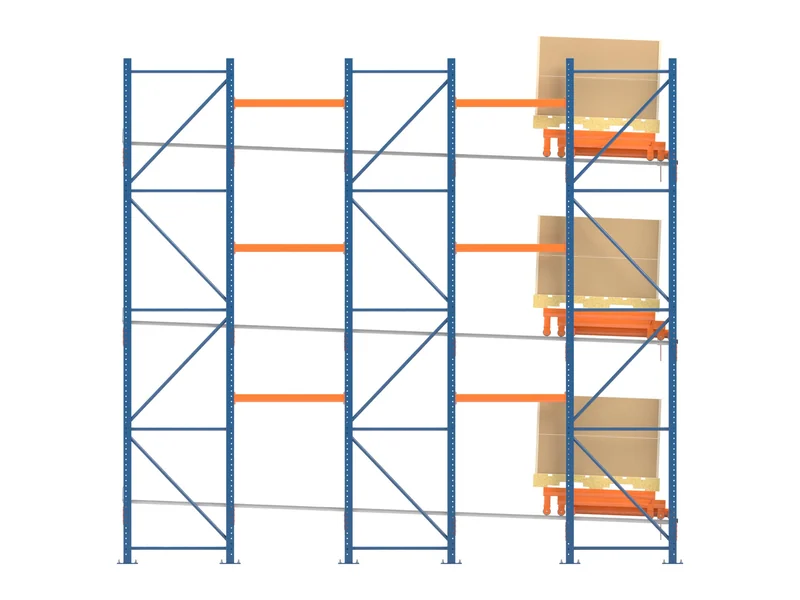
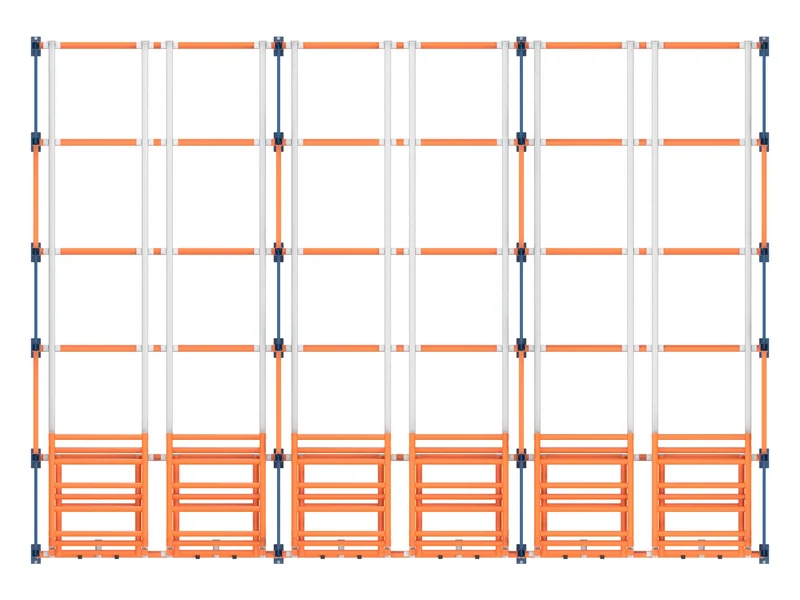
Push-Back Racking From Every Side
Where Push-Back Racking Is Used
Several pallets of each item, but not enough to fill a drive-in lane.
- Food and beverage distribution.
- Cold storage and freezers.
- Manufacturing, finished goods staging.
- Third-party warehouses.
- Wholesale and club-store suppliers.
First in, first out: pallet flow racking. Large amounts of one item: drive-in racking.
Common questions
How deep can push-back racking go?
Two, three and four deep are common. Five and six deep exist, but each added cart raises the load and needs more clearance. Three deep suits most freezer and food operations.
What truck do I need?
A counterbalance or reach truck with the capacity and lift for the top level. The maker confirms the fit. Push gently and keep the pallet square; a crooked pallet is the usual cause of jams.
What pallets work on carts?
Good GMA-style pallets with solid bottom boards. Broken boards hang up; for rough pallets, pallet flow or drive-in may fit better.
Push-back or drive-in?
Push-back for many SKUs with a few pallets each; it costs more per position. Drive-in for a few SKUs by the truckload, the most pallets per square foot for less.
Does the lane keep the right slope?
The rails slope gently toward the aisle, at the angle the maker sets. We set and test it with loaded pallets at installation. Inspect carts and rails once a year.


