

What Carton Flow Is
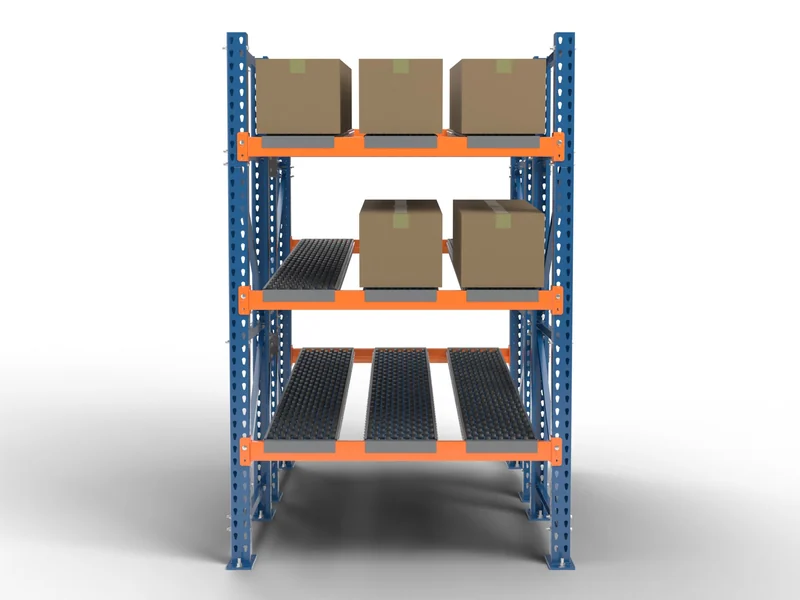
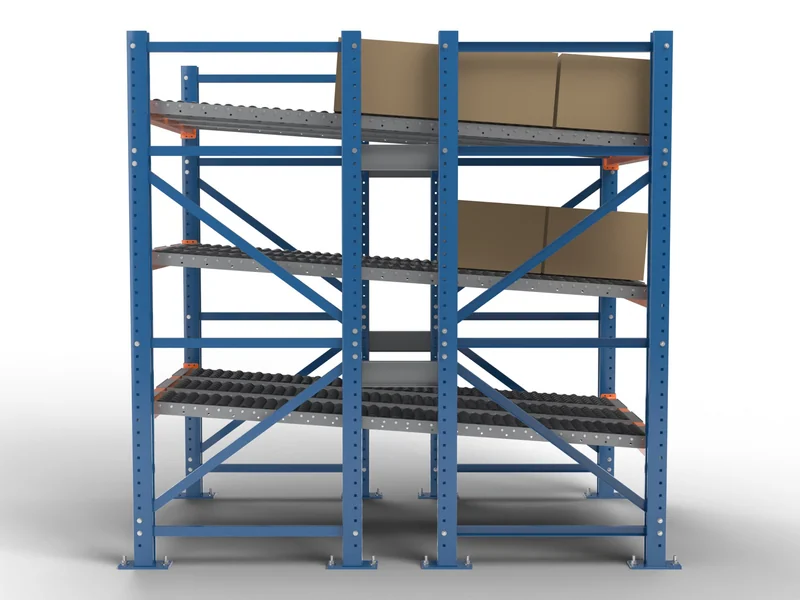
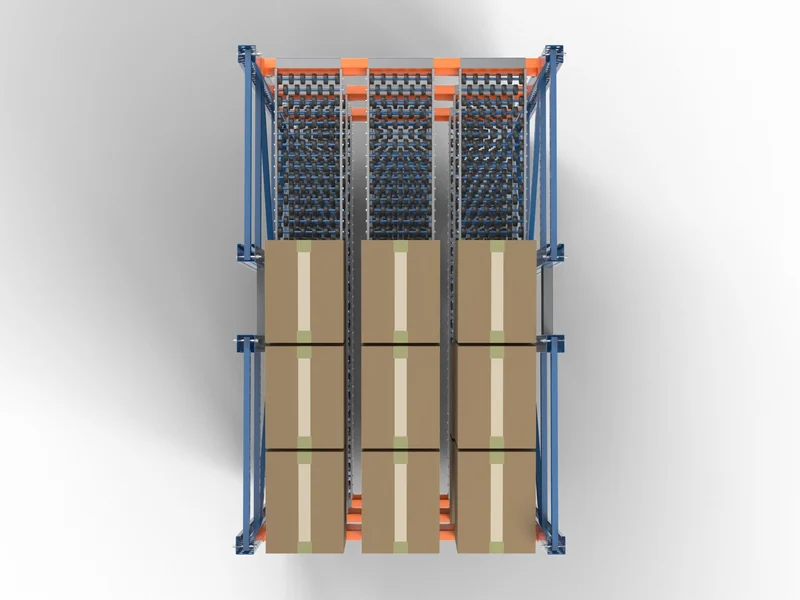
Sloped wheel shelves. Cases load at the back and roll to the pick face, first in, first out within each lane, one SKU per lane. Beds hang on selective beams, often in a pick module or in front of pallet flow.
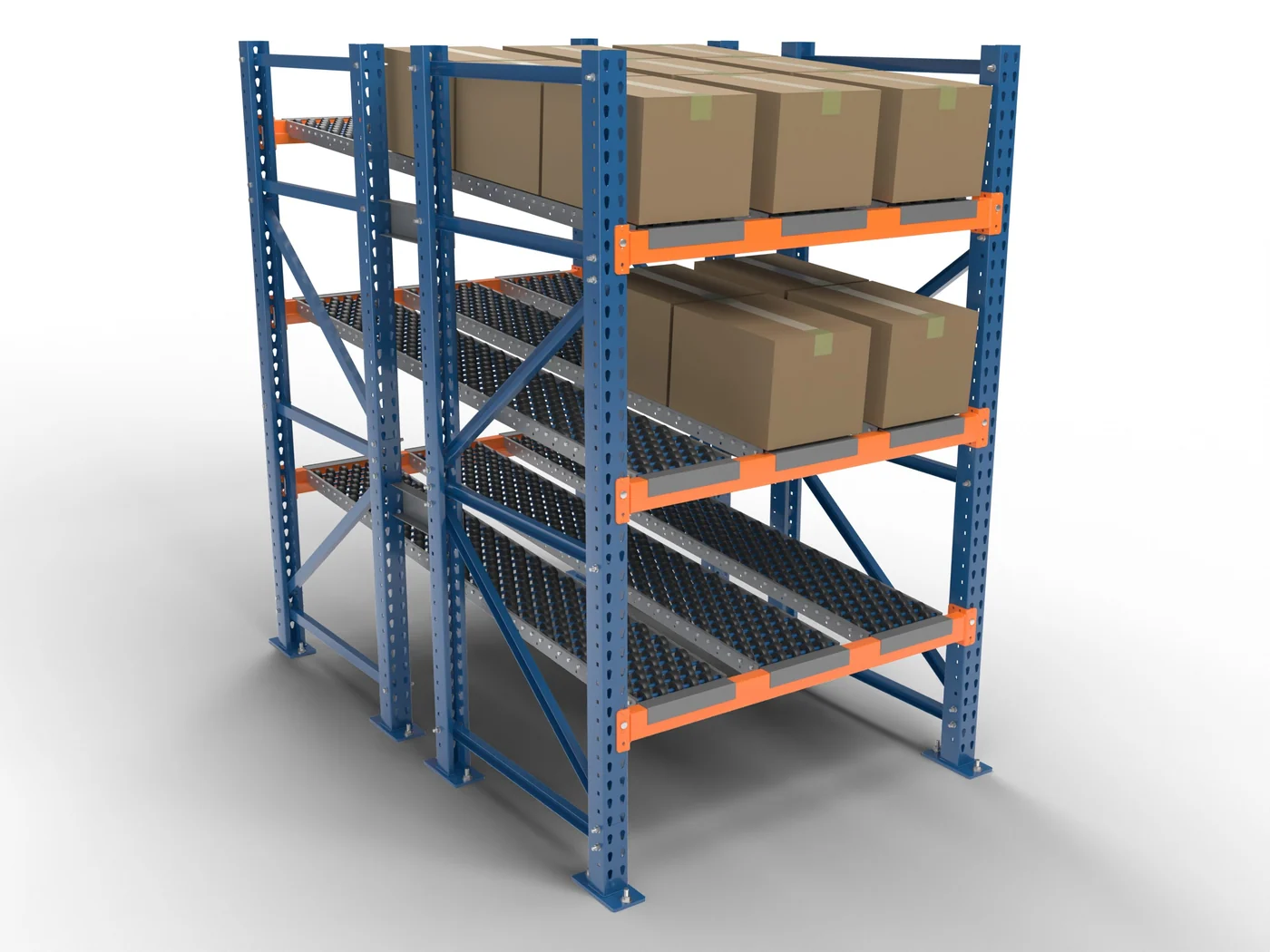
Sizes, Slopes and Loads
| Item | Typical | Notes |
|---|---|---|
| Lane depth | 4' to 12' | Deeper lanes hold more cases per SKU but need a longer replenishment reach |
| Slope | 3/4" to 1" per foot | Set by carton weight and bottom; totes and light cartons need more |
| Lane width | 9" to 24" | Set by the carton; wheel beds take any width |
| Levels | 3 to 5 per bay | Within the picker's reach, 12" to 60" from the floor |
| Capacity | 25 to 60 lb per carton | Heavy cases go on roller lanes |
Add-ons: tilted pick trays, lane dividers, label holders, pick-to-light.
Carton Flow Racking Components
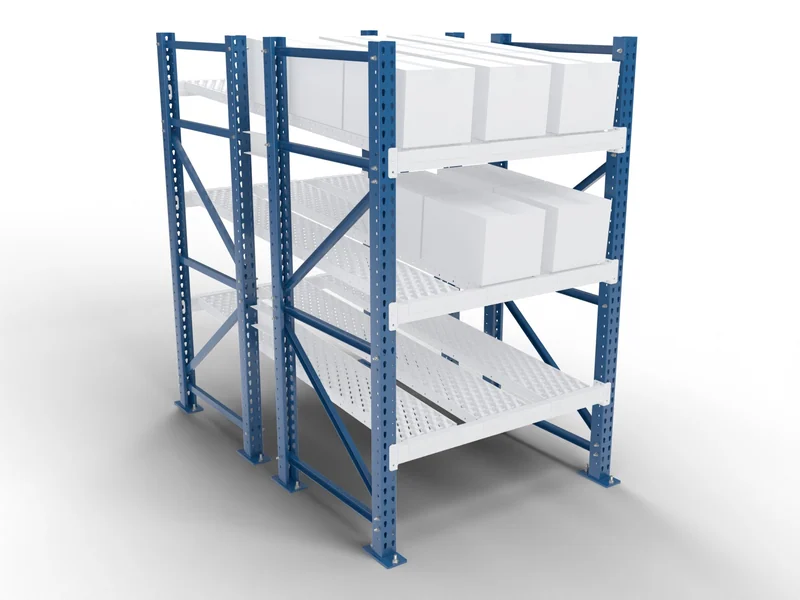
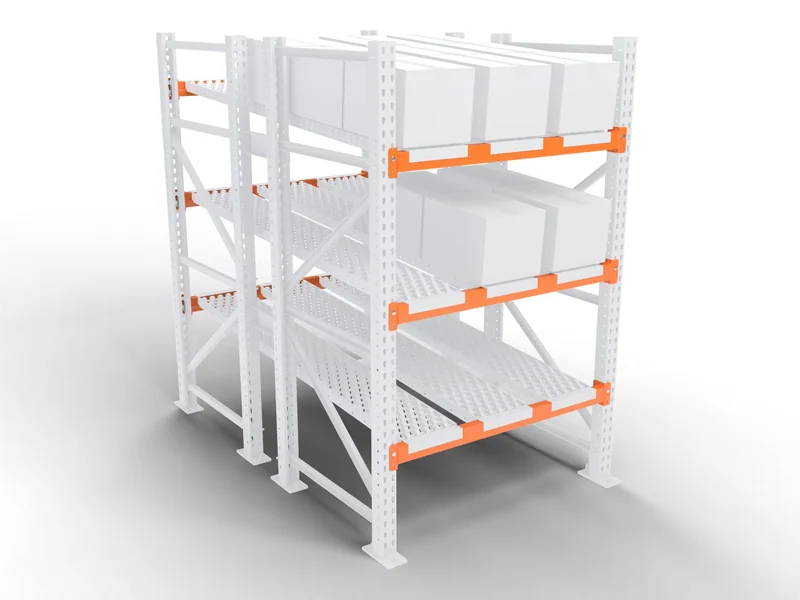
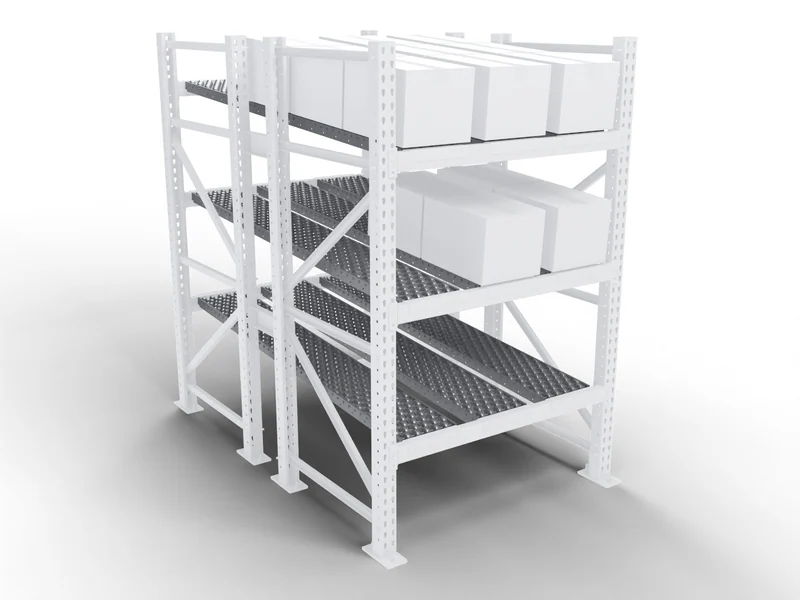
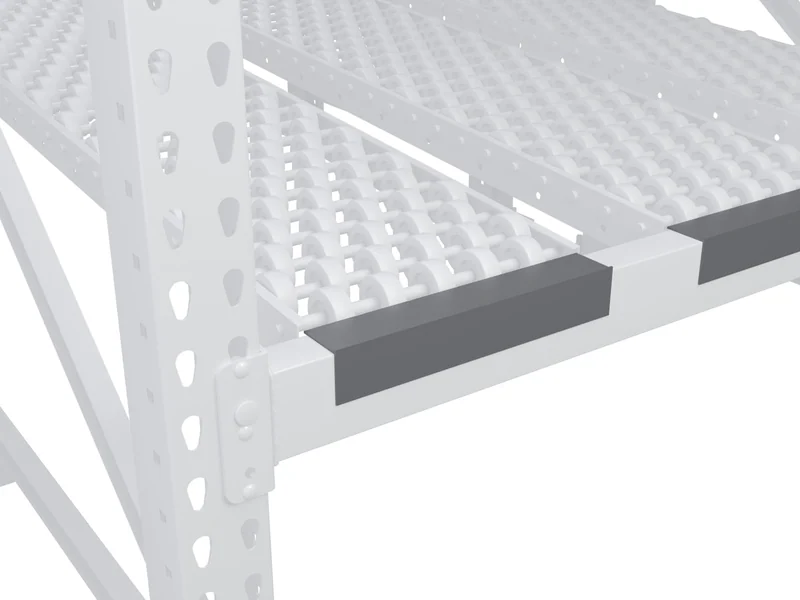
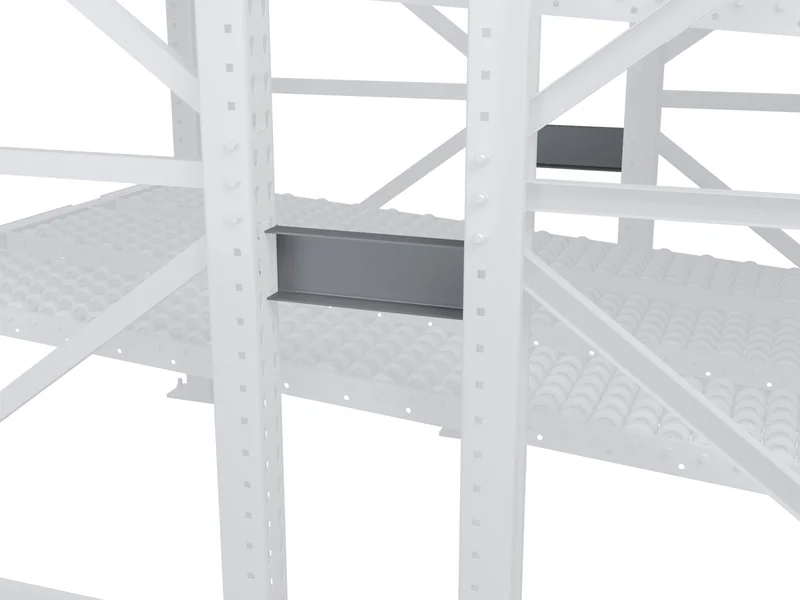
Carton Flow Racking From Every Side
Where Carton Flow Pays
- Many SKUs picked by the case: food, beverage, pharmacy, parts.
- E-commerce each-picking.
- Date-sensitive product.
Static shelving is cheaper for slow movers.
Carton Flow or Pallet Flow?
Pallet flow moves pallets by forklift; carton flow moves cases by hand. Often pallet flow feeds carton flow. See pallet flow racking.
Common questions
How does carton flow racking work?
Cases load at the high back and roll to the low front, so the oldest case in each lane comes out first. That holds when lanes are loaded from the back.
What slope does carton flow need?
About three-quarters to one inch per foot; more for light cartons, totes and soft bottoms. We set each lane on site.
Can carton flow be added to my existing pallet rack?
Usually yes. Beds hang on standard step beams. The bay needs a way to load from the back or front.
What is the difference between carton flow and pallet flow?
Pallet flow moves pallets on heavy rollers by forklift. Carton flow moves cases and totes on wheels by hand.


